- 24/06/2026
- by Uddhav Hargude
- Blog
You’re sitting in the scan room. The sonographer is moving the probe across your belly. Everything looks fine. You smile. But then a small thought creeps in: is the scan actually checking for everything? Is a normal result really enough?
That feeling is completely natural — and it points to one of the most searched questions among expecting parents: can ultrasound detect birth defects early? And it’s also one of the most important questions a pregnant woman can ask. Because the honest answer is: ultrasound is a powerful tool, but it works best when you understand what it checks, what it doesn’t, and when each scan needs to happen. This blog will walk you through all of it in simple, clear language. No medical jargon. No unnecessary alarm. Just the information you actually need.
Your Baby Looks Fine on the Scan: But Is That Enough?
Most pregnancy scans will come back normal. That is genuinely good news. But a normal scan result doesn’t mean every possible condition has been ruled out. It means everything visible at that stage of pregnancy looks as it should.
Ultrasound is a screening tool. It gives your doctor a clear picture of what’s happening inside the womb. It checks structure, size, fluid levels, blood flow, and organ development. But it has limits too, which we’ll get to shortly.
Understanding what each scan is designed to do makes a normal result much more meaningful. And it helps you know exactly when to ask questions.
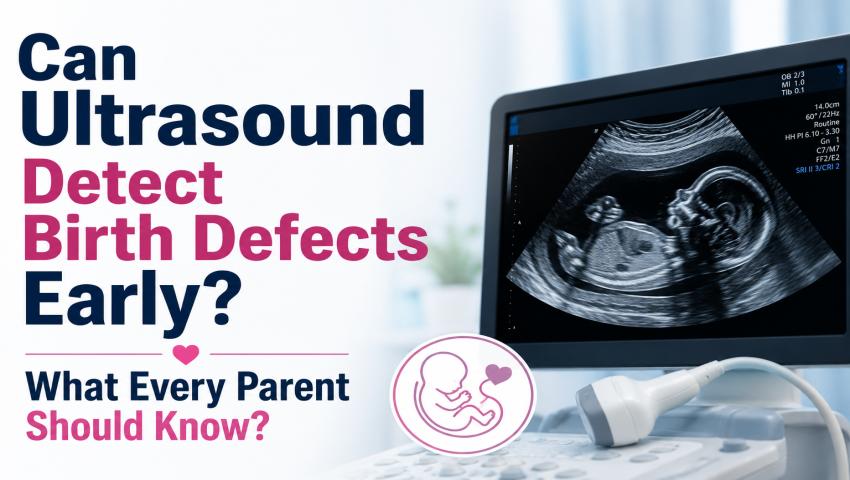
Can Ultrasound Detect Birth Defects Early?
Yes, but not all of them. Ultrasound is very effective at detecting structural birth defects, meaning physical problems with the baby’s body that are visible on the scan. It’s less effective for genetic or chromosomal conditions that don’t cause visible changes.
The key is which scan you’re having and when. A first trimester scan at 11 weeks checks different things than the detailed anomaly scan at 20 weeks. Both are important. Neither can replace the other.
Note: Works best: when combined with blood tests like NT Scan, Double Marker, and NIPT
How Ultrasound Works During Pregnancy?
Ultrasound uses high-frequency sound waves to create images of your baby inside the womb. A small device called a transducer is moved across the belly or sometimes inserted vaginally in early pregnancy for a clearer view.
The sound waves bounce off the baby and surrounding tissue and return as signals that form an image on the screen. There’s no radiation involved. It’s completely safe for both you and your baby.
Modern ultrasound machines produce clear, detailed images. At a well-equipped centre like Pearl Diagnostics in Pimpri, advanced technology means the sonographer can get a much more accurate picture, which directly affects what gets detected and what gets missed.
What Types of Birth Defects Can Ultrasound Detect?
Ultrasound is most reliable for structural defects, which are physical abnormalities in the body’s organs or tissues. Here are the main categories:
Brain and Neural Tube Defects:
- Anencephaly: incomplete development of the brain and skull
- Spina bifida: where the spinal column doesn’t close properly around the spinal cord
- Hydrocephalus: excess fluid building up inside the brain cavities
Heart Defects:
- Major structural heart problems including septal defects and abnormal vessel positions
- Minor heart defects are often missed on a standard scan and need a Fetal Echo for confirmation
Kidney and Abdominal Defects:
- Missing or underdeveloped kidneys
- Gastroschisis: intestines developing outside the abdominal wall
- Blockages in the urinary tract
Skeletal and Limb Abnormalities:
- Missing or shortened limbs
- Dwarfism conditions detectable through bone length measurements
Chromosomal Markers:
- Soft markers like a thickened nuchal fold or short femur can suggest Down syndrome
- These markers are not a diagnosis but prompt further blood testing or genetic screening
First Trimester Scans and What They Screen For...
The first detailed scan happens between 11 and 13 weeks. It’s called the NT Scan, named after the nuchal translucency measurement, which is the fluid at the back of the baby’s neck.
A thicker than normal measurement can indicate a higher risk of Down syndrome, heart defects, or other chromosomal conditions. This is not a diagnosis. It’s a risk indicator that tells your doctor whether further testing is needed.
The NT Scan in Pimple Saudagar is one of the most time-sensitive scans in pregnancy. The window is strictly between 11 and 13 weeks. After that, the measurement is no longer clinically valid.
The NT scan is always paired with a blood test for best accuracy. Together, they form the combined first trimester screening, which can identify up to 90 percent of Down syndrome cases when done correctly and on time.
The Anomaly Scan and What It Actually Checks?
The anomaly scan, done between 18 and 22 weeks, is the most comprehensive structural check in pregnancy. It’s also called the Level 2 scan or 20-week scan.
This scan systematically examines every major part of your baby’s body. Here’s what it covers:
Pearl Diagnostics offers a detailed Anomaly Scan in Pimple Saudagar using advanced ultrasound technology. Scans are reported by Dr. Sagar Sujanyal, an experienced radiologist based in Shastrinagar, Pimpri.
Heart Defects and the Role of Fetal Echo:
The heart is one of the hardest organs to fully assess on a standard anomaly scan. The standard scan gives a four-chamber view and checks the main vessels. But minor defects inside the heart chambers can go undetected.
This is where the Fetal Echocardiography comes in. It’s a dedicated heart scan that uses Doppler ultrasound to look at the heart’s structure and blood flow in much greater detail.
Fetal Echo is recommended when:
- The anomaly scan shows any concern in the heart’s structure
- There is a family history of congenital heart disease
- The NT measurement was higher than normal
- Blood tests show elevated risk markers
At Pearl Diagnostics, Fetal Echo Scan is available for detailed cardiac evaluation during pregnancy. Early detection of a heart defect allows your care team to plan delivery at a hospital equipped for neonatal cardiac support.
When Blood Tests and Ultrasound Work Together?
Ultrasound and blood tests are not alternatives. They complement each other. Many conditions can only be properly screened when both are used together.
The NIPT Pregnancy Test is available at Pearl Diagnostics and offers the highest accuracy for chromosomal screening. It can detect Down syndrome, Edwards syndrome, and Patau syndrome with over 99 percent accuracy from a simple blood draw.
The NIPT test is especially recommended for women over 35, those with a family history of chromosomal conditions, or when the NT scan or blood markers show elevated risk.
High-Risk Pregnancies and Extra Scanning:
Some pregnancies need more frequent scanning than others. This doesn’t mean something is wrong. It means your doctor wants a closer watch to catch any change early.
Extra scans are typically recommended when:
- You have gestational diabetes or high blood pressure
- You are carrying twins or more
- A previous pregnancy had growth restriction or a structural defect
- The baby’s movements have reduced noticeably
- Early scans showed any soft markers or concerns
In high-risk pregnancies, Colour Doppler becomes an essential tool. It measures blood flow through the umbilical cord and placenta to ensure the baby is receiving adequate nutrition.
The Colour Doppler Test at Pearl Diagnostics is used as part of growth scan monitoring for high-risk pregnancies. Abnormal flow patterns can be detected early and acted upon before they become serious — this is part of the same principle that lets ultrasound detect birth defects early and other complications well before delivery.
What Happens When a Scan Finds Something Unusual?
Finding something on a scan is not the same as a diagnosis. Most unusual findings lead to further investigation before any conclusion is reached.
Here is what typically happens:
- A repeat scan is scheduled in two to four weeks to see if the finding has changed
- A fetal medicine specialist may review the scan in detail
- Additional blood tests or genetic testing may be recommended
- If a serious structural defect is confirmed, a full care plan is made before delivery
Soft markers are a common source of anxiety. These are findings like a slightly bright bowel or a small bright spot in the heart. In most cases, they are normal variations. Your doctor will explain what the finding means in the context of your full scan picture and blood test results.
Don’t panic at a single unusual finding. Ask your doctor to explain it, understand what the next step is, and follow through on the recommended testing.
Is Early Detection Always Better?
In most cases, yes. Knowing about a condition before birth gives your medical team time to plan. Delivery can be arranged at the right hospital. Specialists can be ready. Some conditions can even be managed before the baby is born.
But early detection also comes with emotional weight. Some parents want to know everything as soon as possible. Others prefer to take things one step at a time. Both approaches are valid.
What matters most is that you have access to accurate, timely scans so the choice is yours to make with complete information. Missing a scan or delaying it takes that choice away.
Benefits of Early Detection Through Ultrasound:
- Delivery can be planned at a centre with neonatal ICU if needed
- Some conditions like urinary tract blockages can be treated before birth
- Parents have time to connect with specialists and understand the condition
- A full care plan is ready the moment the baby arrives
In some cases, early intervention significantly improves outcomes, which is exactly why the ability of ultrasound to detect birth defects ahead of delivery matters so much.
Best Sonography Centre in Pimple Saudagar for Birth Defect Screening:
The quality of your ultrasound scan depends on two things: the technology being used and the expertise of the radiologist reporting it. Both matter equally.
Pearl Diagnostics, located at Shastrinagar, Pimpri, is equipped with advanced ultrasound technology and offers the complete range of pregnancy screening scans under the supervision of Dr. Sagar Sujanyal, a qualified and experienced radiologist. Reports are accurate, prompt, and clearly explained.
Services available for birth defect screening at Pearl Diagnostics include:
- NT Scan with nuchal translucency measurement
- Anomaly Scan (Level 2) for detailed structural assessment
- Fetal Echocardiography for dedicated cardiac evaluation
- Colour Doppler for blood flow monitoring
- NIPT and pregnancy blood tests through Golwilkar Metropolis partnership
If you are looking for a trusted Pregnancy Scan Centre in Pimple Saudagar, Pearl Diagnostics is open Monday to Saturday from 8 AM to 10 PM and Sunday from 8 AM to 2 PM. Call +91-91569 59267 to book your appointment.
Frequently Asked Questions:
Some major defects can be recognised as early as the end of the first trimester. The NT Scan at 11 to 13 weeks catches the first signs. Most structural defects are confirmed at the anomaly scan between 18 and 22 weeks. Some conditions only become visible later in the third trimester or even after birth.
NIPT (Non-Invasive Prenatal Testing) is a blood test that analyses the baby’s DNA present in the mother’s blood. It can detect Down syndrome, Edwards syndrome, and Patau syndrome with over 99 percent accuracy. It can be done from 10 weeks onwards and is available at Pearl Diagnostics in Pimpri.
Women over 35 are at higher risk for chromosomal conditions like Down syndrome. Key steps include completing all recommended scans on time, pairing ultrasound with NIPT or Double Marker blood tests, taking folic acid before and during pregnancy, managing existing conditions like diabetes or hypertension, and discussing genetic counselling with your doctor before or early in pregnancy.
Yes, in some cases. When ultrasound detects birth defects like urinary tract blockages or certain heart defects, these conditions can be monitored and sometimes managed before delivery. Other birth defects may be monitored on ultrasound throughout the pregnancy. Knowing early gives your medical team time to plan delivery at the right centre and have specialists ready from the moment your baby arrives.
Look for a centre with advanced ultrasound machines, an experienced reporting radiologist, and quick turnaround on reports. Pearl Diagnostics at Pimpri ticks all three. Reports are generated by Dr. Sagar Sujanyal and the centre is equipped for all standard and advanced pregnancy scans.
The most commonly detected structural defects through pregnancy ultrasound are spina bifida (spinal column not closing properly), hydrocephalus (fluid build-up inside the brain), anencephaly (incomplete brain and skull development), and cleft lip. Ultrasound also identifies heart septal defects, kidney abnormalities, gastroschisis (intestines outside the abdominal wall), and limb reduction defects. Diaphragmatic hernia and Down syndrome markers like nuchal fold thickening detected at the NT Scan complete the list. Detection depends on scan type, pregnancy week, and ultrasound quality.